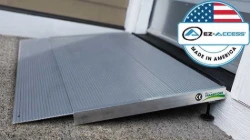
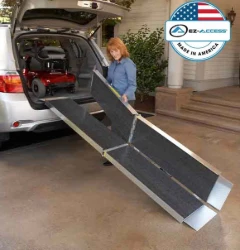
EZ-ACCESS SUITCASE Trifold Ramps
- Portable Trifold ramps
- Can split into two pieces
- Available up to 10 feet long.
SUITCASETFAS
$465.99 From $355.99
Accessibility products are physical items that help a person with limited mobility, strength, balance or sensory function do everyday tasks safely. They range from simple disability aids like a grab bar or reacher to larger mobility equipment like modular aluminum wheelchair ramps.
Under U.S. federal law (the Assistive Technology Act), an assistive technology device is any item, piece of equipment or product system used to increase, maintain or improve the functional capabilities of individuals with disabilities. That definition covers everything from a rubber threshold ramp to a smart doorbell.
Accessibility products matter because the need is common. The CDC reports that more than 1 in 4 U.S. adults has a disability , and mobility disability (serious difficulty walking or climbing stairs) is the most common type, affecting about 1 in 8 adults .
These terms overlap and are often used interchangeably, but each emphasizes something different.
| Term | What it usually means | Examples |
|---|---|---|
| Mobility equipment | Products that help a person move or move through a space | Wheelchairs, scooters, walkers, wheelchair ramps, stair lifts |
| Assistive devices | Broad category for any item that compensates for a functional limitation | Ramps, grab bars, hearing aids, shower chairs, reachers |
| Disability aids | Consumer term for everyday assistive devices | Bath benches, raised toilet seats, dressing aids |
| Adaptive tools | Items modified or designed so a task can be done a different way | Built-up utensils, lever door handles, inflatable bathing tubs |
| Accessible technology | Electronic or digital products designed for all abilities | Voice assistants, smart locks, video doorbells, screen readers |
| Accessibility solutions | The complete fix for a barrier, often combining several products | Ramp + handrail + threshold ramp for a front entry |
| Home accessibility products | Assistive devices installed in or around a residence | Entry ramps, accessible steps, bathroom safety equipment |
In short: mobility equipment moves people, assistive devices and disability aids help with tasks, adaptive tools change how a task is done, and an accessibility solution is the right combination for a specific barrier.
Home accessibility products serve a wider group than most people expect:
A wheelchair ramp is a sloped surface that replaces steps so a wheeled mobility device can travel between two heights. Ramps are the most important piece of mobility equipment for most homes because they solve the entry barrier.
| Ramp type | Best for | Typical rise | Permanent or temporary |
|---|---|---|---|
| Threshold ramps | Door sills, sliding-door tracks, single small steps | Up to a few inches | Either |
| Portable ramps | 1 to 3 steps, travel, visiting homes, vans | Low to moderate | Temporary / movable |
| Modular aluminum ramps | Porches, decks, multi-step entries | Moderate to high | Semi-permanent, removable |
How long should a wheelchair ramp be? At the ADA-recommended 1:12 slope, a ramp needs 1 foot of length for every 1 inch of rise. A 24-inch rise needs a 24-foot ramp plus landings. Use the Ramp Wizard or read our ADA ramp slope guide to size yours.
Why aluminum? Aluminum modular ramps don't rot, rust or need painting, install without permanent footings in most cases, and can be reconfigured, expanded or resold when needs change. That is why many families and contractors choose them over wood.
Threshold ramps bridge small height changes (door sills, raised floors, weather strips and sliding-door tracks) that catch wheelchair casters, walker feet and toes. They're often overlooked, but a half-inch lip can stop a manual wheelchair or cause a trip.
See our threshold ramp selection guide .
Not everyone who struggles with stairs uses a wheelchair. For walker and cane users, a ramp isn't always the answer. Well-designed steps with consistent riser heights, deep treads and sturdy handrails can be safer and take far less space.
Adjustable metal stairs are a practical accessibility solution for manufactured homes, modular offices, raised entries and job sites, where uneven or high step-ups are common.
Handrails and grab bars provide a stable point of support for balance and transfers. They are among the least expensive disability aids and one of the most effective at preventing falls.
Towel bars are not grab bars. Always anchor grab bars into studs or with rated anchors.
See our aluminum deck handrail system .
The bathroom is one of the highest-risk rooms for falls , because of wet surfaces, low seating and tight turning space. Common bathroom accessibility products include:
Browse bathroom safety equipment .
These products move with the user rather than being installed in the home:
Your personal mobility device dictates the rest of your home setup. Always check the combined weight of user plus device before selecting a ramp, and note the device's width and turning radius when planning doorways and landings.
Accessible technology reduces the number of trips, reaches and transfers a person has to make. Useful examples include:
Small disability aids solve many daily frustrations:
Use this checklist to find barriers before choosing products.
| Area | Common barrier | Accessibility solution |
|---|---|---|
| Front / back entry | Steps, porch, raised stoop | Modular or portable wheelchair ramp, handrails, accessible steps |
| Doorways | Raised sills, narrow openings | Threshold ramps, offset (swing-clear) hinges, automatic opener |
| Living areas | Rugs, clutter, level changes | Remove loose rugs, add threshold ramps, clear 36" paths |
| Bathroom | Tub walls, low toilet, wet floors | Transfer bench, grab bars, raised seat, non-slip surfaces |
| Bedroom | Bed height, nighttime navigation | Bed rail, motion lights, bedside commode |
| Kitchen | High shelves, hard-to-turn knobs | Pull-down shelving, lever faucets, reachers |
| Garage / vehicle | Step into house, van loading | Short portable ramp, threshold ramp, vehicle ramp |
Follow these five steps:
Rule of thumb: If the rise is under about 6 inches, start with a threshold or small portable ramp. If it's a few steps, consider a portable or modular ramp. If it's a full porch or deck, a modular aluminum ramp system with landings and handrails is usually the most practical accessibility solution.
Costs vary widely by type, size and material:
For ramps specifically, total cost depends mostly on rise, since rise sets ramp length and the number of landings. The Ramp Wizard gives a configuration and price for your exact measurements.
Several programs can help cover costs. Eligibility and amounts change, so confirm current details with each program.
Express Ramps is not a tax or benefits advisor. Consult a qualified professional or the program directly for eligibility.
Express Ramps has helped homeowners, caregivers, veterans, contractors and businesses find the right accessibility solutions since 1999. We specialize in wheelchair ramps, threshold ramps, accessible steps and related mobility equipment, including EZ-ACCESS product lines, and we help customers size products correctly before they order. The most common cause of a ramp that doesn't work is a measurement mistake. Common assistive devices for the home include wheelchair ramps, threshold ramps, handrails, grab bars, shower chairs, raised toilet seats, stair lifts, reachers, lever door handles and smart home devices such as video doorbells and voice assistants. Mobility equipment helps a person move or move through a space: wheelchairs, scooters, walkers and ramps. Assistive devices is a broader term covering any product that compensates for a functional limitation, including mobility equipment plus items like hearing aids, bath benches and dressing aids. For most wheelchair, scooter and walker users, a safe step-free entrance is the most important home accessibility product, usually a wheelchair ramp. Without an accessible entry, a person can't safely leave or return home independently. Original Medicare generally does not cover wheelchair ramps because they are considered home modifications rather than durable medical equipment. Veterans may qualify for VA HISA grants, and many state Medicaid waivers and nonprofit programs help fund ramps. Seniors aging in place benefit most from products that prevent falls and ease transfers: grab bars, handrails, threshold ramps, non-slip flooring, shower chairs, raised toilet seats, motion-sensing night lights, entry ramps and medical alert devices. Choose a portable solution for temporary needs, travel, rentals or small rises. Choose a modular or permanent solution for long-term needs and larger rises. Modular aluminum ramps offer a middle ground: sturdy enough for daily use but removable and reconfigurable. Accessible technology is electronic or digital technology designed so people of all abilities can use it. In the home, it includes smart locks, video doorbells, voice-controlled lighting, automatic door openers and fall-detection devices. Measure the total rise in inches from the ground to the top surface you need to reach. At a 1:12 slope, you need 1 foot of ramp per inch of rise, plus level landings at the top, bottom and any turns. The Express Ramps Ramp Wizard calculates this for you. Need help? Try the Ramp Wizard , explore more Learn guides , email info@expressramps.com , or call 866-491-1110 .Frequently asked questions
What are examples of assistive devices for the home?
What is the difference between mobility equipment and assistive devices?
What is the most important home accessibility product?
Are wheelchair ramps covered by Medicare?
What accessibility products help seniors age in place?
Should I choose a portable or permanent accessibility solution?
What is accessible technology?
How do I know what size wheelchair ramp I need?