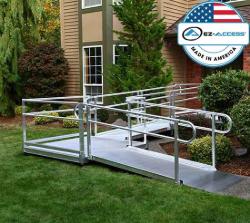
Short answer: An aluminum wheelchair ramp is a lightweight, rust-resistant ramp that bridges steps, thresholds, curbs, and vehicle entries for wheelchairs, scooters, and walkers. Aluminum weighs about one-third as much as steel and will not rust or rot. Choose by rise: threshold ramps for small lips, portable ramps for 1 to 3 steps, and modular systems for porches and long runs.
Express Ramps has sold and sized aluminum ramps since 1999. This guide explains why aluminum is the standard material for home and business access ramps, walks through the five types of aluminum ramps, and shows how to choose the right length, width, and capacity for your entrance.
Important: an aluminum ramp is not ADA-compliant unless the product listing specifically says so. Most portable and threshold ramps are built for residential use, not for commercial code compliance. See Wheelchair Ramp Codes and Requirements before buying for a business.
Why is aluminum the best material for a wheelchair ramp?
Aluminum is the only common ramp material that is light, strong, and weatherproof at the same time. Wood and steel each give up at least one of those three.
- Lightweight: one person can usually lift, carry, set up, and store an aluminum ramp. A steel ramp of the same size typically weighs two to three times more.
- Weather resistant: aluminum forms a protective oxide layer instead of rusting, so it handles rain, snow, and sun outdoors without paint or sealant.
- Strong: extruded aluminum supports wheelchairs, power scooters, and light cargo while folding or packing down to a compact size.
- Slip resistant: textured or perforated aluminum surfaces give traction in wet conditions.
- Low maintenance: no sealing, staining, painting, or rust treatment. Unlike wood, aluminum will not warp, crack, or rot.
- Easy to install and change: most ramps need no special tools, and modular systems can be expanded, reconfigured, or removed later.
Aluminum vs. wood vs. steel ramps
| Factor | Aluminum | Wood | Steel |
|---|
| Weight | Light - about 1/3 of steel | Heavy, built in place | Heaviest - 2 to 3 times aluminum |
|---|
| Rust and rot | Will not rust or rot | Can rot, warp, and crack | Rusts without coating |
|---|
| Upkeep | Soap and water | Sealing and staining | Painting and rust prevention |
|---|
| Portable | Yes, in folding and single-piece designs | No | Rarely |
|---|
| Reconfigure or remove | Yes, with modular systems | Demolition required | Difficult |
|---|
The aluminum ramps in this guide are made by EZ-ACCESS.
What types of aluminum ramps are there?
There are five main types of aluminum ramps. The right one depends on how high the rise is, whether the ramp needs to move, and whether it carries people or equipment.
| Type | Rise served | Moves? | Best for | Example line |
|---|
| Threshold ramps | Up to 6 inches | Light, repositionable | Doorways, sliding door tracks, single steps, landings | EZ-ACCESS TRANSITIONS |
|---|
| Portable folding ramps | About 6 to 24 inches | Yes - folds and carries | Vans, travel, visits, renters, 1 to 3 steps | EZ-ACCESS SUITCASE |
|---|
| Solid single-piece ramps | Single steps to a low porch | No - stays in place | Fixed home access where a straight run fits | EZ-ACCESS GATEWAY 3G |
|---|
| Modular ramp systems | Any - configurable | Semi-permanent | Porches, long runs, turns, platforms, handrails | EZ-ACCESS PATHWAY 3G (home), PATHWAY HD (business) |
|---|
| Loading and walk ramps | Truck bed, trailer, or dock height | Yes | Equipment and cargo, not wheelchair users | EZ-ACCESS TRAVERSE |
|---|
Threshold ramps: for doorways and small lips
A threshold ramp is a small, wedge-shaped ramp that removes the lip at a doorway, sliding glass door, landing, or single step. The EZ-ACCESS TRANSITIONS Modular Entry Ramp is a free-standing aluminum threshold ramp that installs without tools and adjusts to several heights. Aluminum threshold ramps cover rises up to 6 inches; rubber threshold ramps cover up to 4.75 inches. Compare options in the Threshold Ramp Selection Guide.
Portable aluminum ramps: when the ramp has to travel
Portable aluminum ramps fold or come as a single piece you carry to where you need it, unfold, and set against a step, curb, or vehicle. No installation is needed. The EZ-ACCESS SUITCASE Singlefold reaches 8 feet and carries 800 pounds; the SUITCASE Trifold reaches 10 feet at the same capacity. Common uses include visiting family, travel, loading a scooter into a van, and temporary event access. See How to Choose a Portable Wheelchair Ramp.
Solid single-piece ramps: fixed access without a full system
EZ-ACCESS GATEWAY 3G solid-surface ramps are one-piece aluminum ramps rated to 1,000 pounds. They suit a single step or low porch where a straight run fits and the ramp can stay in place.
Modular aluminum ramp systems: when the rise is real
A modular ramp system is a set of aluminum ramp sections, platforms, turns, handrails, and stairs that bolt together into a complete entrance ramp. It replaces a built-in-place wood ramp and can be reconfigured or removed later. The EZ-ACCESS PATHWAY 3G system builds to your layout with straight runs, 90- and 180-degree turns, platforms, adjustable stairs, and handrails; PATHWAY 3G Solo Ramp Kits include everything needed and can install in as little as 30 minutes. For business and public entrances, PATHWAY HD is built for ADA-compliant installations. Choose modular when the rise is more than about two feet, when you need handrails, or when the ramp will stay for months or years.
Aluminum loading ramps: for equipment, not people
A loading ramp is a heavy-duty aluminum ramp for moving equipment into a truck bed, trailer, or storage area: lawn equipment, snow blowers, carts, and hand trucks. EZ-ACCESS TRAVERSE Singlefold Edgeless Loading Ramps fold, have built-in carry handles, and use an edgeless design for wider loads. TRAVERSE Portable Walk Ramps handle walking loads at vehicles and docks and are rated from 1,200 to 1,600 pounds. Always confirm the ramp's capacity covers your equipment weight. See How to Choose a Portable Loading Ramp or Curb Ramp.
How do you choose the right aluminum ramp?
Match four specifications to your entrance and your user. Getting these right matters more than any single feature.
- Measure the rise. Rise is the vertical distance from the lower surface (driveway, sidewalk, or landing) to the top surface you need to reach. The rise decides the ramp type.
- Pick the length from the slope. The ADA standard is a 1:12 slope, or 1 foot of ramp for every 1 inch of rise. A 6-inch rise needs a 6-foot ramp at 1:12. Shorter ramps are steeper and harder to climb.
- Check usable width. The space between the edges or rails must clear the wheelchair, scooter, or walker with room to spare.
- Check weight capacity. Add the user, the mobility device, and anyone assisting. The ramp rating must exceed that total.
Then confirm two more things: whether the ramp needs to be portable or permanent, and whether it needs edge protection or handrails for safety. The Ramp Wizard calculates the length and type from your rise automatically.
Where are aluminum ramps used?
- Homes: front steps, porches, doorways, and sliding doors for wheelchair, scooter, and walker users.
- Businesses and public buildings: permanent entrances built to meet ADA requirements, using commercial-rated systems such as PATHWAY HD.
- Vehicles: loading wheelchairs and scooters into vans, and equipment into trucks and trailers.
- Events and temporary sites: short-term access for public events, rentals, and construction zones.
How do you maintain an aluminum ramp?
Rinse or wash the surface with soap and water to remove dirt, salt, and debris, and keep the traction surface clear of leaves, ice, and snow. Aluminum does not need painting, sealing, or rust treatment, and it holds its strength and shape for years of outdoor use. More tips are in Wheelchair Ramp Care and Maintenance.
Aluminum ramp FAQs
Are aluminum ramps better than wood ramps?
For most homes, yes. Aluminum ramps will not rot, warp, or crack, need no sealing or staining, install faster, and can be removed or reconfigured. Wood ramps are built in place and need ongoing upkeep.
Do aluminum ramps rust?
No. Aluminum forms a protective oxide layer instead of rusting, so it can stay outdoors in rain and snow without paint or coatings.
Are aluminum wheelchair ramps ADA compliant?
Only if the product listing says so. Most portable and threshold aluminum ramps are designed for residential use. For businesses and public entrances, use a system built for ADA compliance, such as EZ-ACCESS PATHWAY HD.
How much weight can an aluminum ramp hold?
It depends on the model. EZ-ACCESS SUITCASE portable ramps carry 800 pounds, GATEWAY 3G solid ramps carry 1,000 pounds, and TRAVERSE walk ramps carry 1,200 to 1,600 pounds. Always check the listing.
How long should an aluminum ramp be?
At the ADA 1:12 slope, allow 1 foot of ramp for every 1 inch of rise. A 12-inch rise needs a 12-foot ramp. The Ramp Wizard calculates this for you.
Are aluminum ramps slippery when wet?
Quality aluminum ramps use textured or perforated surfaces that provide traction in wet weather. Keep the surface clear of ice, leaves, and debris.
Need help choosing? Our team has been sizing ramps since 1999. If you would rather have a person look at your entrance, send photos and your rise measurement to info@expressramps.com, or start with the Ramp Wizard.
Related guides: How to Choose the Right Wheelchair Ramp | Portable Wheelchair Ramps | Threshold Ramps | Loading and Curb Ramps