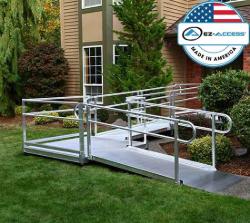
Quick answer: A contractor-built wooden wheelchair ramp usually runs $2,000 to $10,000 once lumber, labor, concrete footings and permits are added, and it needs sealing and repairs every year. A modular aluminum ramp such as the EZ-ACCESS PATHWAY 3G starts from $1,000, ships free, installs yourself in a few hours, needs almost no upkeep and can be moved or resold. Over 10 years, aluminum is usually the lower total cost.

Key Takeaways
- Wood looks cheaper on paper, but labor, footings, permits and inspections often double the price of the lumber.
- After only a couple of years, a wooden ramp needs constant maintenance: sealing, sanding and replacing boards. An aluminum ramp needs little more than sweeping.
- Pressure-treated wood lasts up to about 10 years. PATHWAY 3G aluminum residential ramps are backed by a lifetime warranty.
- A modular aluminum ramp can be reconfigured, taken to a new home or resold. A wooden ramp is usually demolished.
- A wooden ramp may not meet code; that depends on how well your contractor knows ramp requirements. PATHWAY 3G is designed to meet common residential ramp requirements.
- Either material must still follow the 1:12 slope rule: 1 foot of ramp for every inch of rise.
The Hidden Costs of Building a Wooden Ramp
The lumber is only the start. A safe, code-friendly wooden ramp needs a design, concrete footings below the frost line, framing, decking, handrails on both sides, a level top landing and often a building permit with one or more inspections. Most homeowners hire a contractor for that work, which is where the cost climbs. After it is built, the wood starts weathering right away, and within a couple of years it needs constant maintenance. These problems are common:
Bumpy Transitions

Boards shrink, cup and shift, leaving lips at the joints and at the bottom of the ramp that jolt a wheelchair or catch a walker.
Handrails with Splinters

Weathered wood rails crack and splinter, and nail or screw heads work loose over time, right where hands and sleeves slide.
Not Ramp Code Compliant

Whether a wooden ramp meets code depends on the builder. Contractors who do not build ramps often can end up too steep, too narrow or without proper landings, and warping can push the slope past 1:12 later. See our wheelchair ramp codes guide before you build.
Wood vs Aluminum Ramp Cost Comparison
| Cost item | Wooden ramp (contractor built) | Aluminum ramp (PATHWAY 3G kit) |
|---|
| Materials | About $100 to $250 per linear foot | Complete kit from $1,000, priced by length and platforms |
| Typical installed total | About $2,000 to $10,000 or more | Kit price only when you install it yourself |
| Labor | Usually a contractor, several days on site | DIY with basic hand tools; straight kits in as little as 30 minutes |
| Footings | Concrete footings usually required | Adjustable legs; no concrete in most installations |
| Code compliance | Depends on the contractor's knowledge of ramp code | Designed to meet common residential ramp requirements |
| Permits and inspections | Often required for a permanent structure | Often not required for removable equipment (check locally) |
| Shipping | Lumber delivery fees vary | Free to the contiguous U.S., 3 to 5 business days |
| Yearly maintenance | Sealing, staining, board and fastener replacement | Occasional sweeping and a bolt check |
| Typical lifespan | Up to about 10 years; constant maintenance after a couple of years | Built to last; backed by a lifetime residential warranty |
| When needs change | Demolish and rebuild | Add, remove or rearrange sections |
| Value when no longer needed | None; removal adds cost | Can be moved to a new home or resold |
10-Year Cost Example: 20-Inch Rise
A 20-inch rise needs a 20-foot ramp at a 1:12 slope (use our ramp sizing guide to check your own rise).
- Wood: 20 feet at roughly $150 to $500 per foot installed is about $3,000 to $10,000 up front. Add constant upkeep once it is a couple of years old, and by year 10 the ramp may need to be rebuilt entirely.
- Aluminum: A 20-foot straight PATHWAY 3G run is about $3,200 in our custom builder, shipped free and installed by you in an afternoon, with near-zero upkeep and resale value at the end.
Feature by Feature: Aluminum vs Wood
| PATHWAY 3G Aluminum Ramps | Wooden Ramps |
|---|
| Will not rot, rust or splinter |  Weathers and decays; lasts up to about 10 years |
| Virtually maintenance free | Constant sealing and repairs after a couple of years |
| Factory non-skid surface | Can be slippery when wet |
| Smooth transition plates on and off the ramp | Uneven joints and bumpy transitions |
| Captured fasteners, nothing protruding | Nail and screw heads can work loose |
| Installs in hours with basic hand tools | Several days of construction |
| No concrete footings in most installations | Requires footings that stay in the yard |
| Designed to meet common residential ramp requirements | May not meet code, depending on the contractor's knowledge |
| Lifetime residential warranty | No manufacturer warranty on a site-built ramp |
| Recyclable aluminum with resale value | No resale value; must be demolished |
When a Wooden Ramp Can Still Make Sense
Wood is a fair choice if you are a skilled builder with the time to do it right, if the ramp must curve or tie into an existing wood deck, or if an HOA requires a permanent structure that matches the house. Plan for footings, permits, constant maintenance after the first couple of years and a rebuild around year 10, hire a contractor who knows ramp code, and build to the slope, width and landing rules in our ramp code guide .
Check the door swing. With wood or aluminum, if the entry door opens outward you need a level top platform large enough for the wheelchair to sit clear of the door. A 5 x 5 foot platform also gives room to turn.
Ways to Pay for an Aluminum Ramp
Express Ramps offers financing through PayPal Pay Later , including 4 interest-free payments. Because you skip contractor labor and permit fees, the kit price is usually most of what you spend. See the full ramp cost and financing guide for prices by ramp type.
Frequently Asked Questions
Is a wooden wheelchair ramp cheaper than aluminum?
Wood lumber can cost less than an aluminum kit if you build it yourself. Once you add contractor labor, concrete footings, permits, inspections and yearly maintenance, a wooden ramp usually costs more over its life than a modular aluminum ramp you install yourself.
How much does it cost to build a wooden wheelchair ramp?
Industry cost guides put wood ramp materials at about $100 to $250 per linear foot, and a contractor-built wooden ramp at roughly $2,000 to $10,000 or more depending on length, landings, handrails, footings and local labor rates.
How long does a wooden wheelchair ramp last compared to aluminum?
A pressure-treated wooden ramp lasts up to about 10 years, and it starts needing constant maintenance after only a couple of years: sealing, sanding and replacing warped or rotting boards and loose fasteners. A welded aluminum ramp will not rot, rust or splinter, and PATHWAY 3G residential ramps are backed by a lifetime residential warranty .
Do I need a permit for a wheelchair ramp?
A permanent wooden ramp on concrete footings is usually treated as a structure and often needs a building permit and inspections. A modular aluminum ramp on adjustable legs is often treated as removable equipment and may not need a permit. Rules vary, so check with your local building department.
Can I take an aluminum ramp with me if I move?
Yes. A modular aluminum ramp bolts together, so it can be taken apart, reconfigured for a new entrance, expanded with more sections or platforms, or resold. A wooden ramp is built for one entrance and is usually left behind or demolished.
Is aluminum or wood safer for a wheelchair ramp?
Aluminum ramps have a factory non-skid surface, smooth transition plates and captured fasteners. Wood can become slippery when wet, can warp so the slope changes, and can develop splinters and raised nail or screw heads as it ages.
Wood ramp cost ranges are estimates drawn from published national cost guides and vary by region, lumber prices, design and contractor. Aluminum prices reflect Express Ramps pricing at the time of writing; see the product page for current pricing. Permit and code requirements vary by location, so confirm with your local building department.